HarVertaInspired by Nature. Driven by Technology.Start your project ↗
TRENالعربية

TURNKEY FARMING FACILITIES

Imagine a space.
Let the future grow within.

Turnkey vertical and soilless farming facilities, from design to installation.

↗Start your project
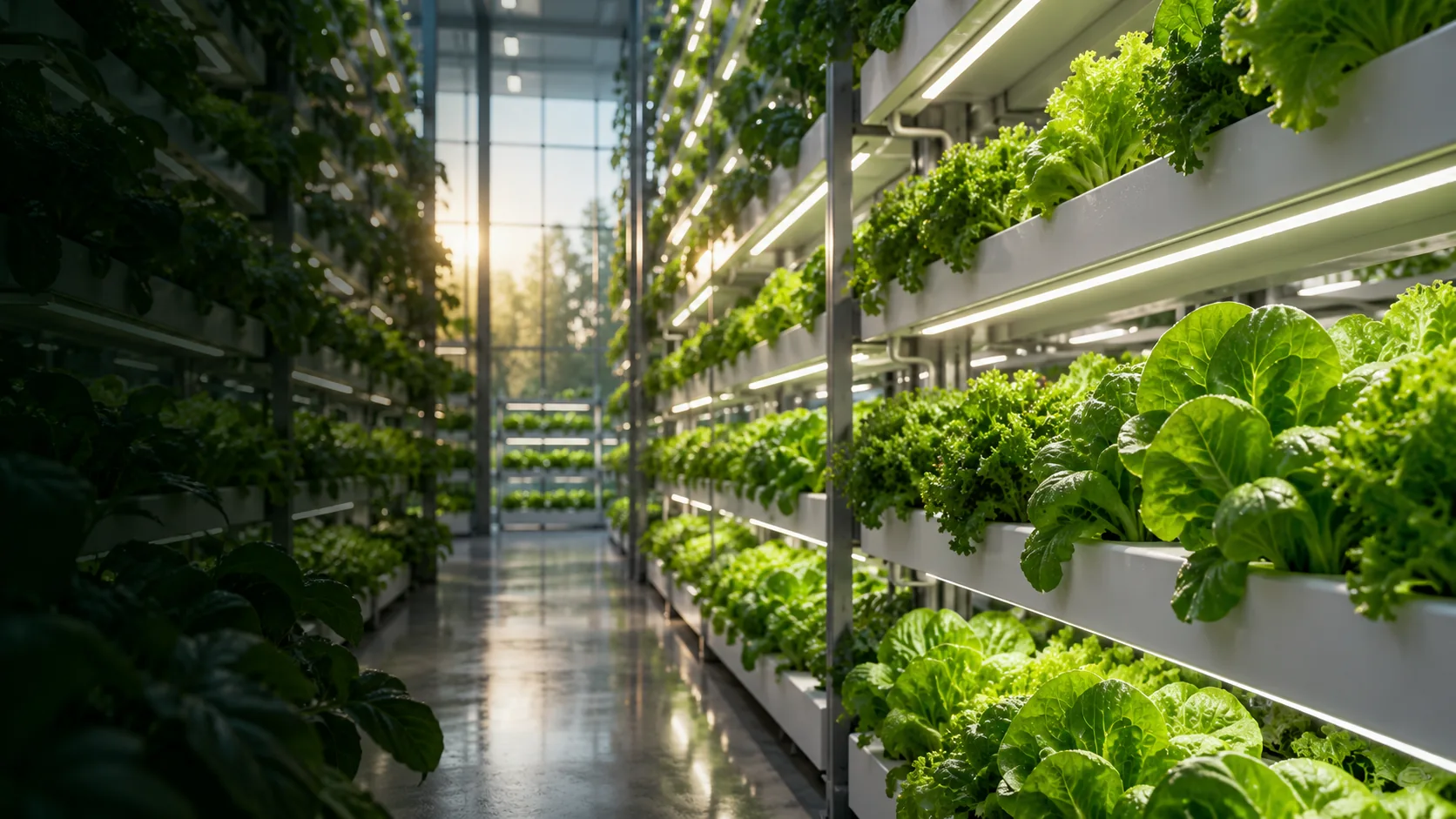
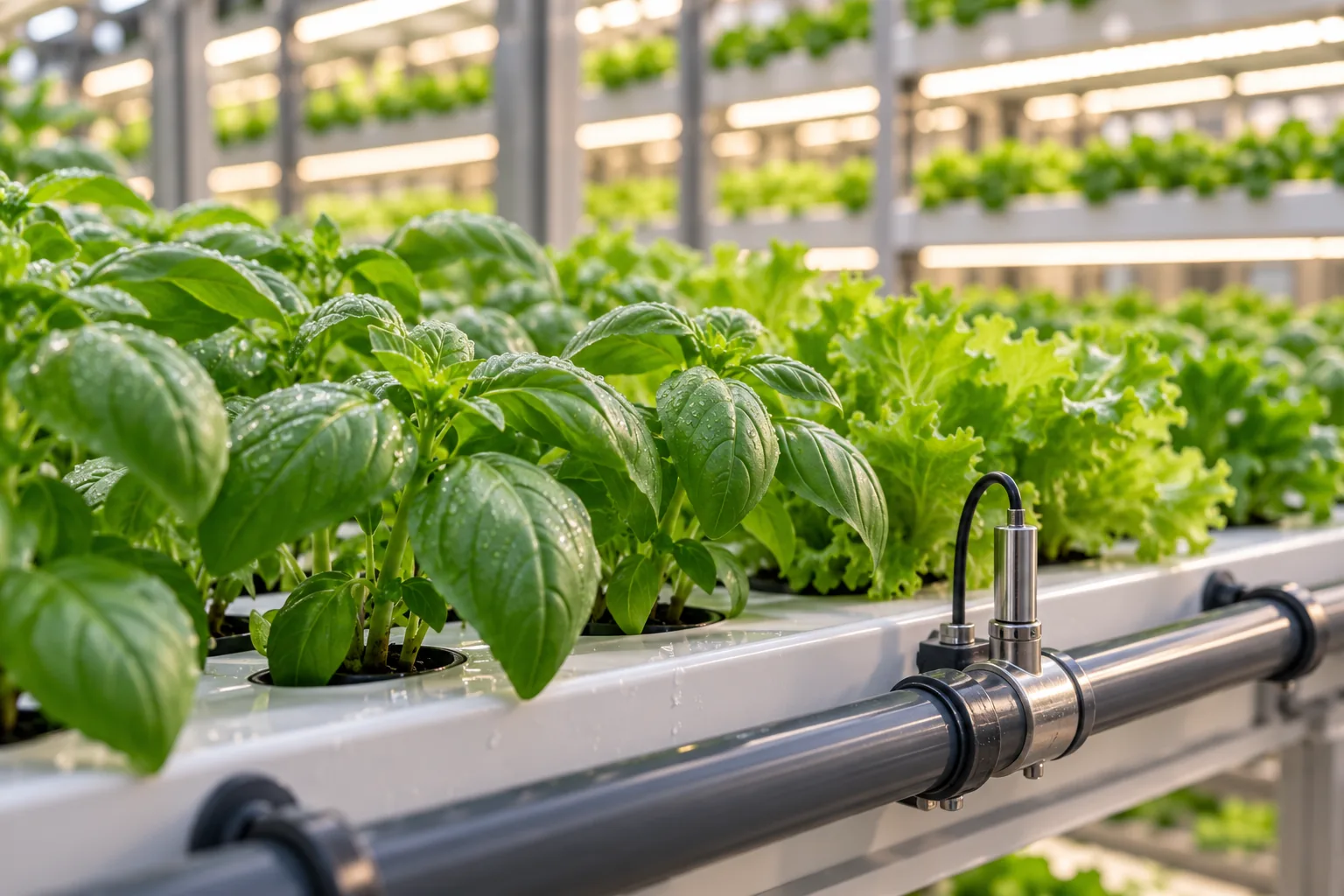
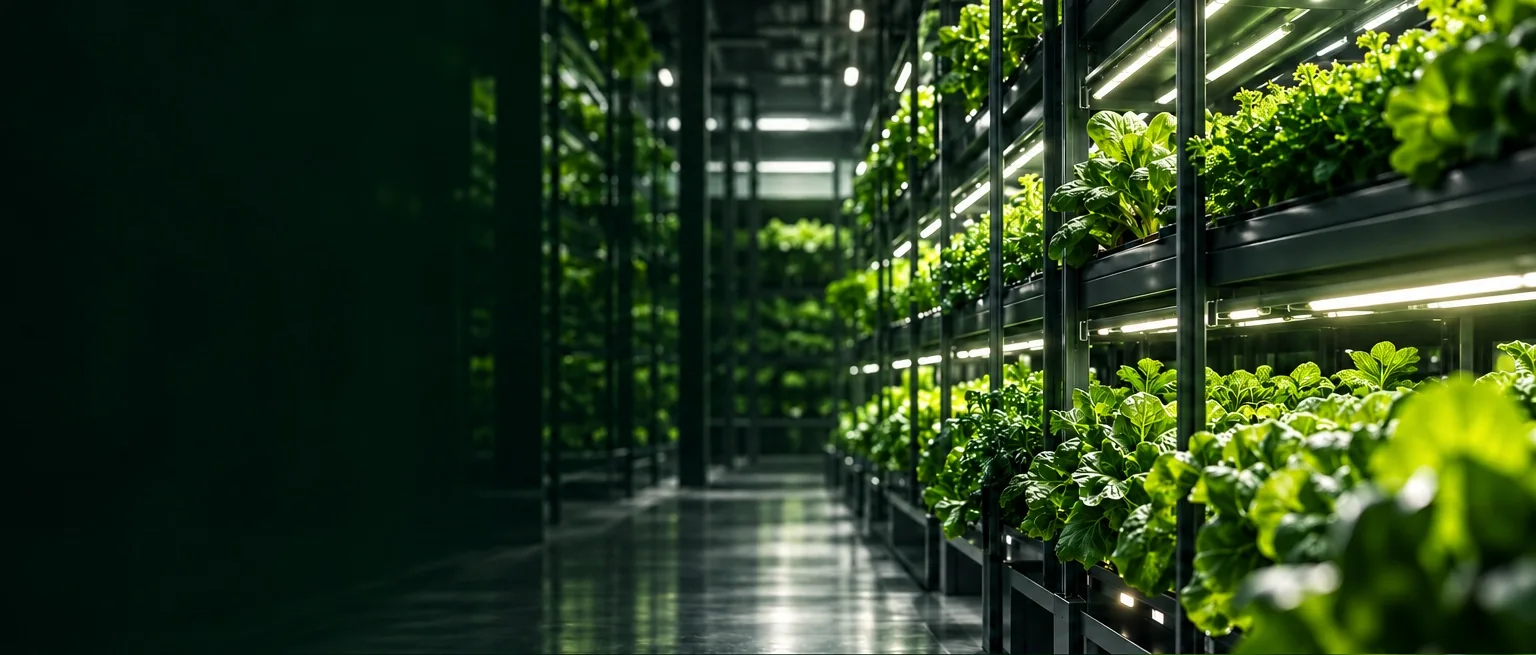
Controlled-environment vertical farm — illustrative image
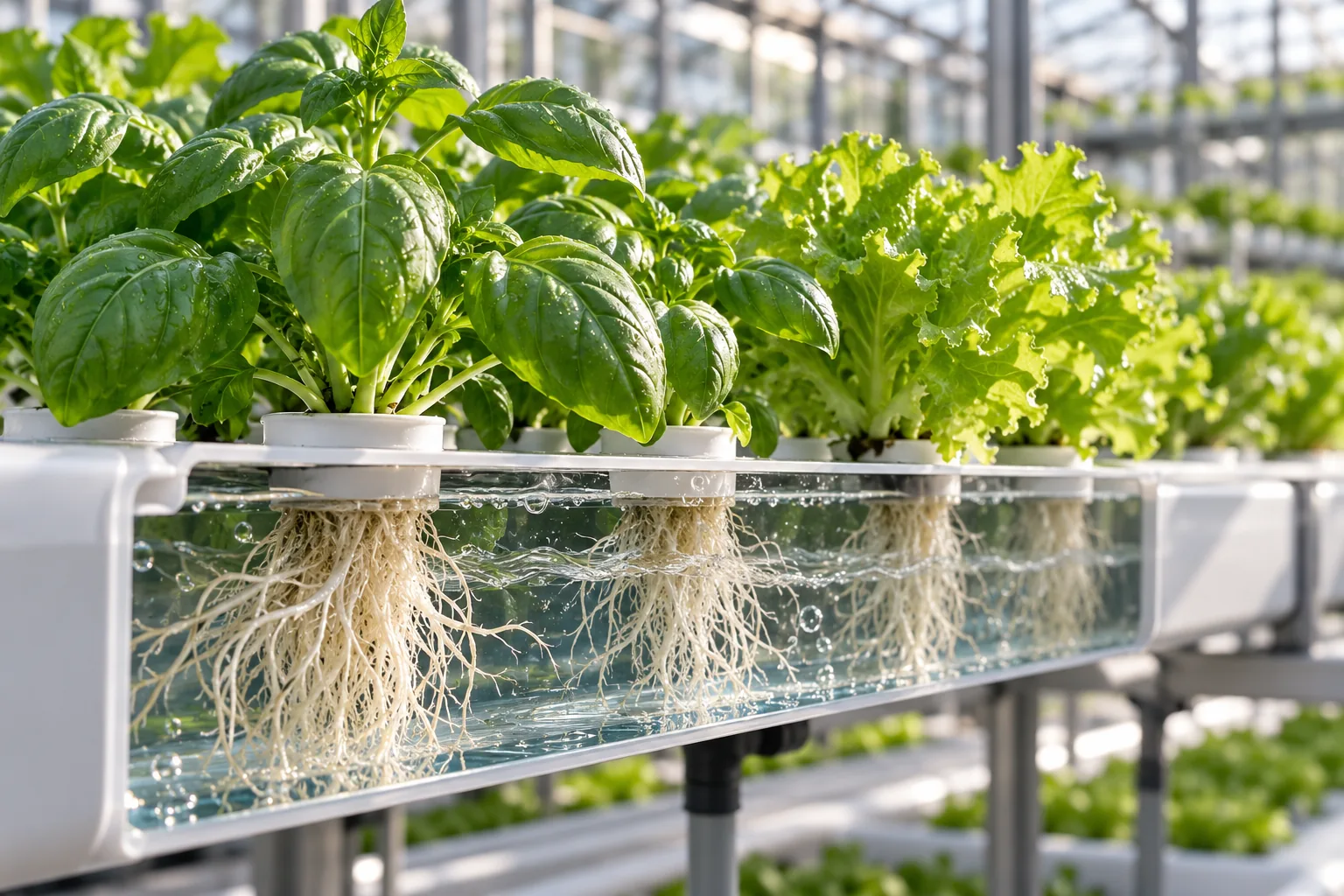
Green leaves with water droplets — illustrative image

FOR A BETTER TOMORROW

Technology in harmony
with nature.

We provide end-to-end vertical and soilless farming solutions for a more efficient, cleaner and sustainable food future.

LESS SPACE.✳MORE FUTURE.✳HARVERTA.

Vertical and soilless farming:
turnkey solutions.

Every investment has its own climate, crop and goals. Harverta brings the right growing model together with the right engineering.

Vertical growing racks — AI-generated illustrative imageHARVERTA / GROW DIFFERENT
01 / VERTICAL

Vertical farming

Turn indoor spaces into production areas with multi-tier growing systems. Manage light, temperature and humidity around the needs of your crop.

  • Multi-tier growing design
  • LED and climate-control integration
  • Focus on leafy greens and herbs
Let’s plan your solution ↗
Plant roots in nutrient solution — AI-generated illustrative imageHARVERTA / GROW DIFFERENT
02 / HYDROPONIC

Soilless farming

Deliver nutrients to roots through a controlled water solution. Manage water quality, nutrient balance and root health as one system.

  • Hydroponic system planning
  • pH and EC monitoring approach
  • Water and nutrient circulation management
Let’s plan your solution ↗
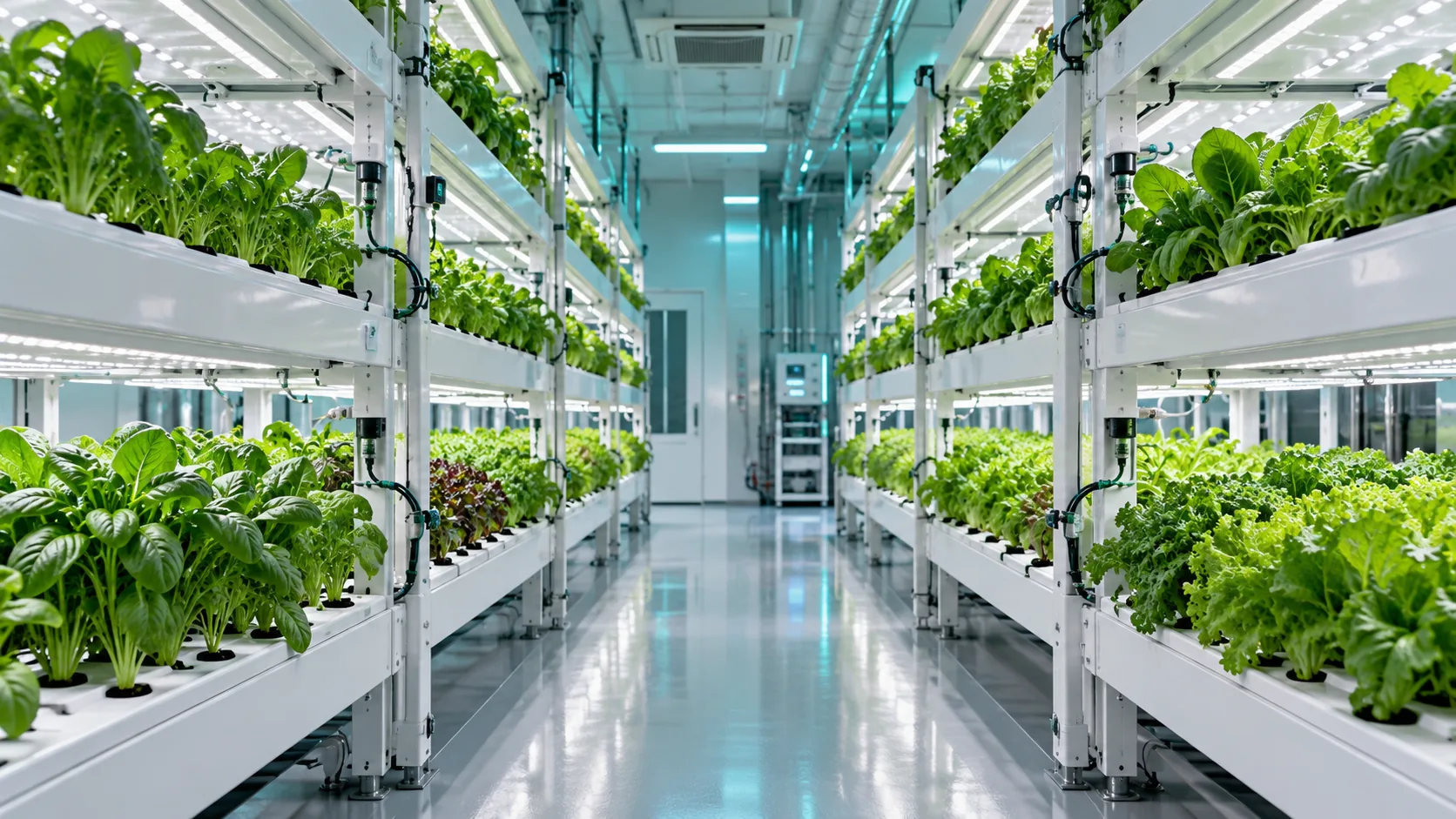
Advanced controlled-environment farm — AI-generated illustrative imageHARVERTA / GROW DIFFERENT
03 / ADVANCED GROWING

Advanced farming

Precision production through advanced farming technology. A facility approach combining light, climate and nutrient management in controlled growing environments.

  • Controlled growing rooms
  • Precision monitoring and automation
  • Research and pilot systems
Let’s plan your solution ↗

Technology working together
across every tier.

An efficient facility starts with coordinated components. We assess crop needs alongside infrastructure and operating conditions.

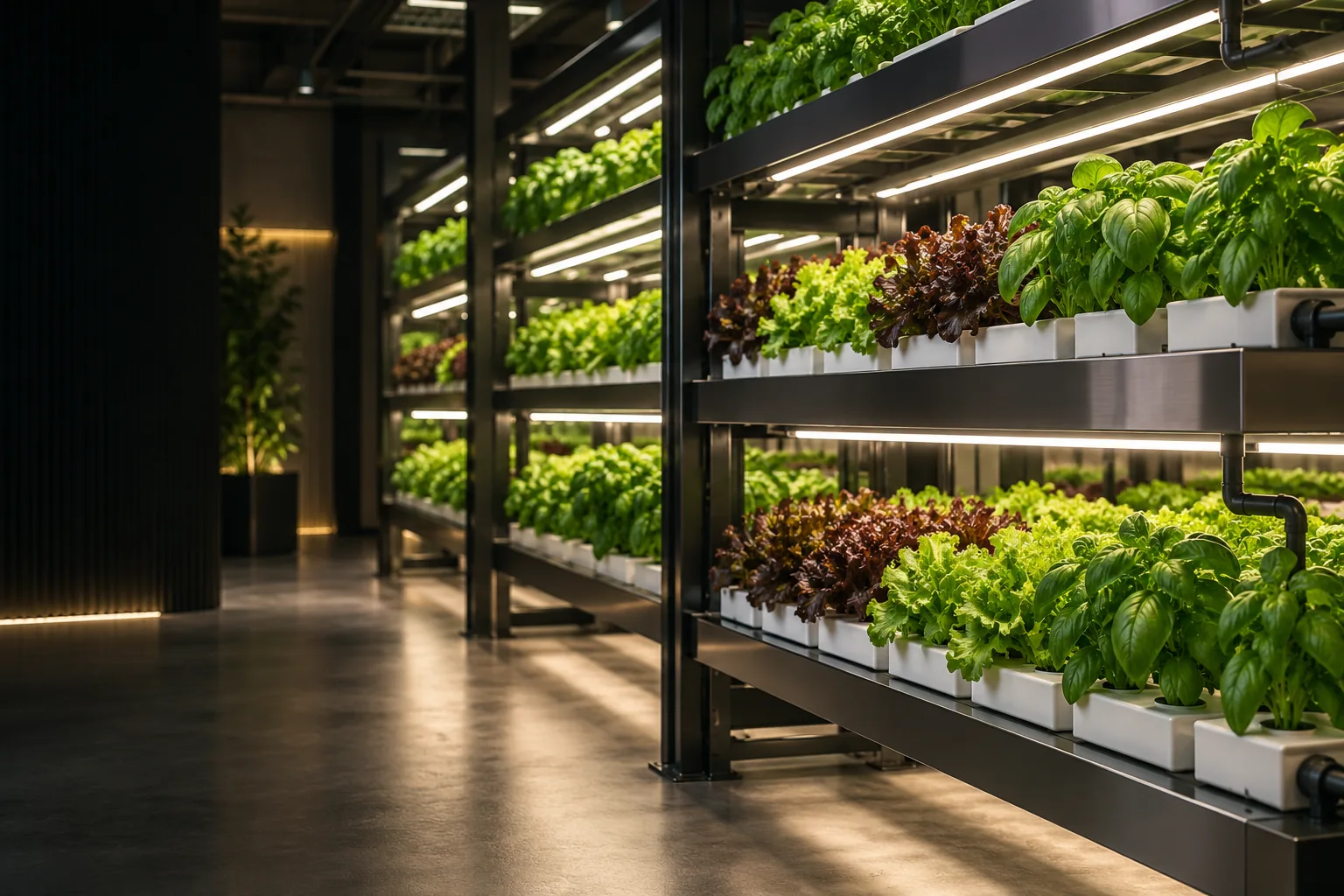
Controlled growing systems — illustrative imageLIGHT + CLIMATE + WATER + DATA
01 Crop-appropriate lighting +

LED selection considers intensity, spectrum, daily light integral and heat load together. The aim is suitable, balanced light distribution on every growing tier.

02 Climate and airflow +

Temperature, relative humidity and air circulation are planned together. Climate-control capacity is sized around plant density, LED heat load and site conditions. CO₂ management is assessed separately where required.

03 Water and crop nutrition +

Irrigation timing, pH and EC monitoring, nutrient solution and water quality are parts of one design. Recirculation, filtration and hygiene needs depend on the growing method.

04 Monitoring and automation +

We define needs for sensor data, threshold alerts and production records. Automation is matched to budget, staffing and maintenance capacity. Remote access and integration scope are clarified per project.

05 Resources and energy planning +

Lighting and climate-control consumption are assessed together. Water recovery, energy tariffs and renewable options are examined in feasibility studies; outcomes depend on crop and location.

06 Hygiene and maintenance access +

Staff and product flows, cleaning areas, equipment access and maintenance needs are included in the layout. Critical components and operating procedures are assessed in advance to support production continuity.

Equipment, control ranges and service scope are defined per project after crop, site and feasibility assessment.

Multi-tier hydroponic facility conceptYOUR SPACE. YOUR GOALS.

FLEXIBLE FACILITY DESIGN

Turn your space
into production.

We make use of available space with multi-tier growing layouts. Rack placement, crop selection and daily workflows are planned together to shape the facility around your goals.

  • A suitable starting pointChoose the right scale together for pilot production or a commercial facility.
  • A crop-led systemAccount for the different needs of leafy greens, herbs and seedling production.
  • Planned for growthConsider future capacity increases from the very first layout.
Explore soilless farming ↗
Plants and irrigation infrastructure in hydroponic channelsLIGHT. WATER. CLIMATE. TOGETHER.

CONTROLLED GROWING

The crop’s needs
at the centre of design.

We consider lighting, irrigation, crop nutrition and climate within one production plan. Suitable conditions for different crop groups underpin a more predictable operation.

  • A clearer view of operationsDefine monitoring and alert requirements for essential growing conditions.
  • Manage resources thoughtfullyStrengthen your operating plan by assessing water circulation and energy needs together.
  • Infrastructure designed for maintenancePlan cleaning, equipment access and downtime scenarios before installation.
Let’s discuss your production goals ↗
Images are illustrative concepts showing the facility approach.

HARVERTA / EXAMPLE FACILITY

From concept to facility.
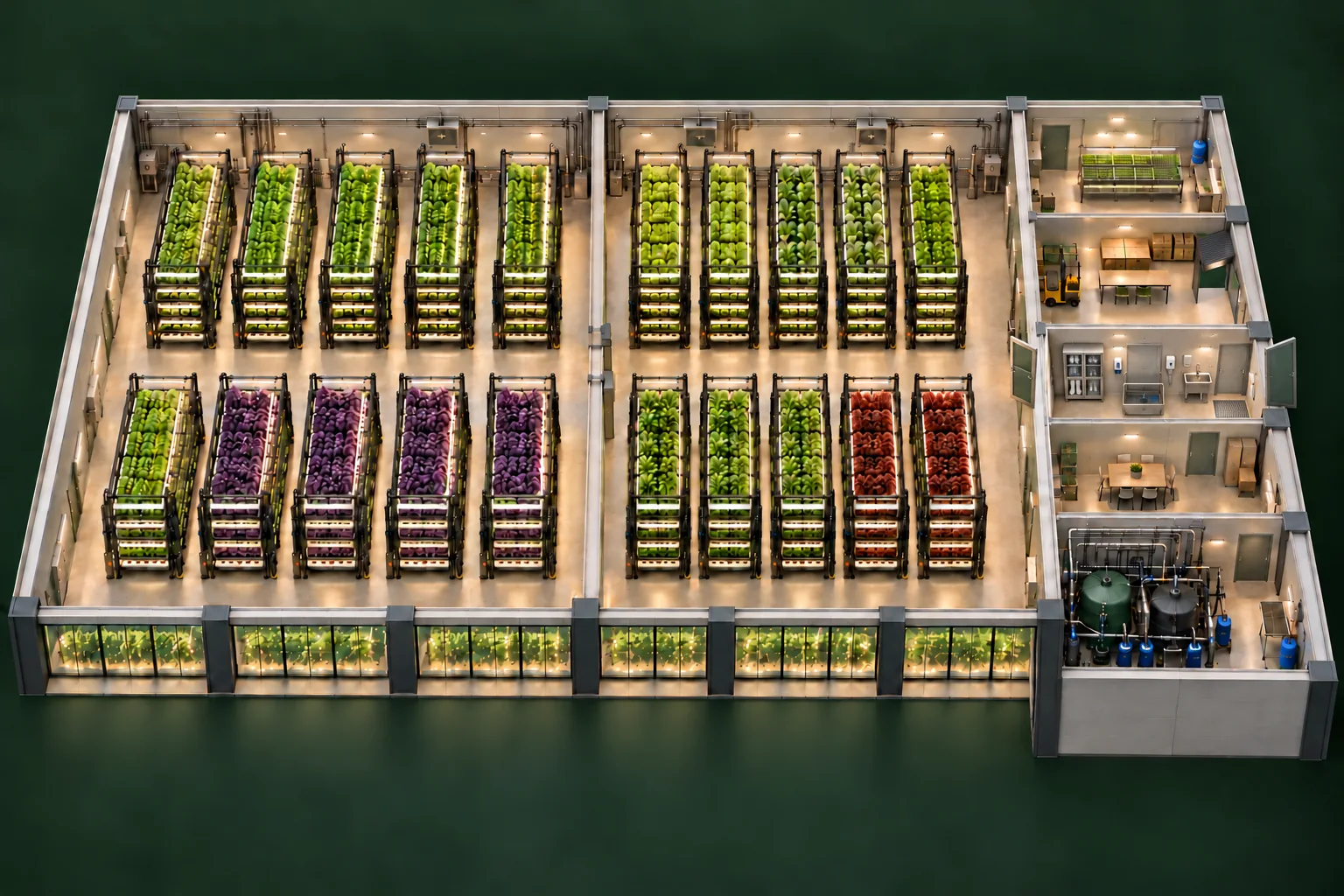
Explore it in 3D.

See how production, seedling preparation and operational areas can be planned together.

Explore the example project ↗
3D example hydroponic facility concept

You imagine it.
We build it together.

An integrated approach that plans growing infrastructure, climate, water, energy and automation together, from concept to commissioning.

Let’s make a start on your project ↗
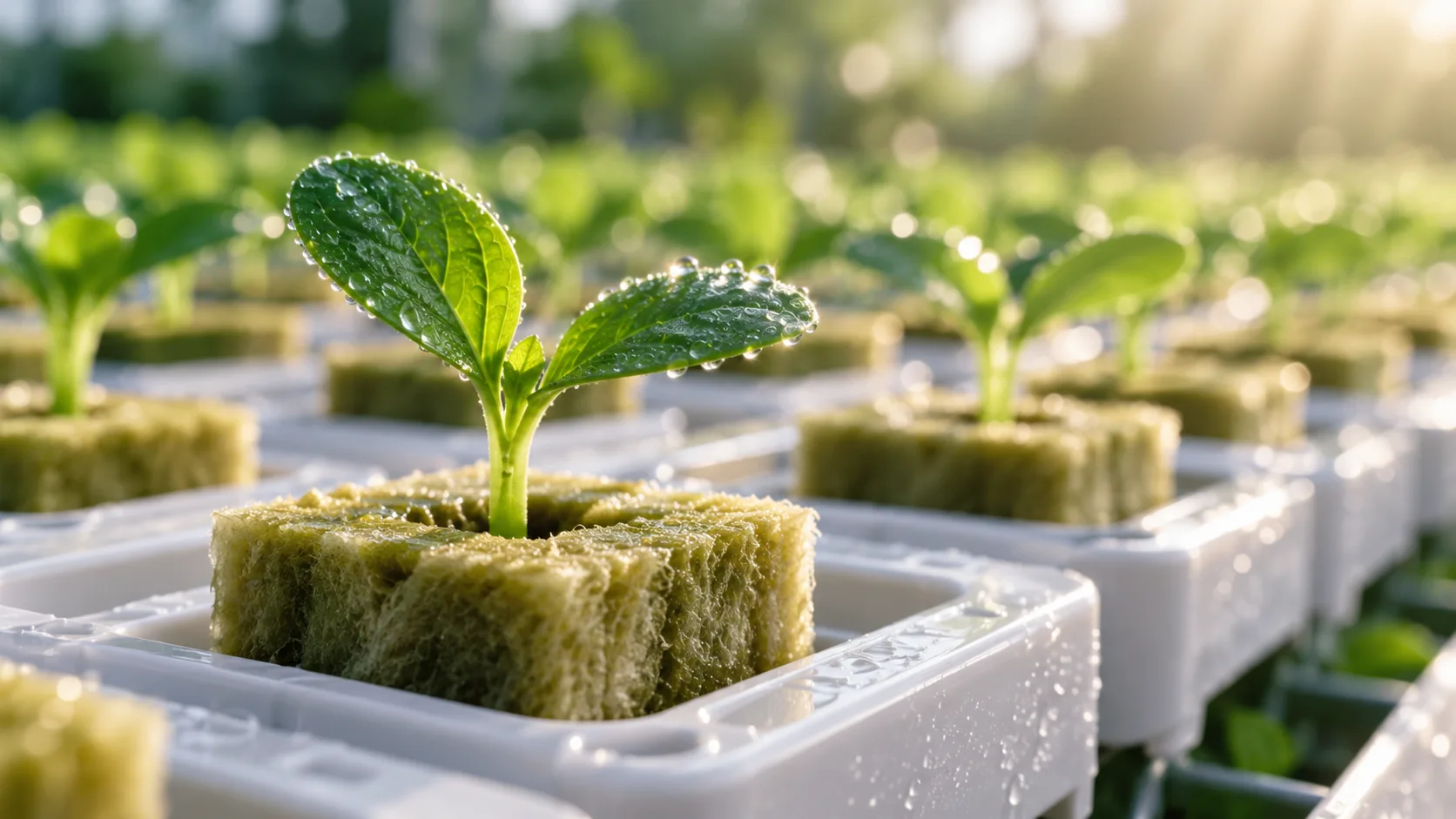
Hydroponic seedling cube — AI-generated illustrative imageA small seed.
A big transformation.
Project scope is defined together according to site conditions and the target production model.
  1. 01

    We listen & analyse

    We assess crop, location, infrastructure and market goals to frame the technical and economic feasibility study.

  2. 02

    We design & integrate

    We turn growing systems, water management, lighting and climate control into a coordinated facility plan.

  3. 03

    We install & commission

    We complete installation, test systems and prepare for production. Together, we clarify the handover scope and the steps towards operation.

  4. 04

    We prepare for production together

    We plan training and maintenance so your team can operate the system. Ongoing support options are defined according to your project’s scope.

One approach.
Different growing goals.

The application determines facility scale and technical needs. The first step is to clarify what you want to grow and for whom.

01 / COMMERCIAL PRODUCTION

Facilities focused on harvest

Production for local markets, retail and foodservice. Capacity planning considers crops, sales demand and logistics together.

02 / SEEDLINGS & YOUNG PLANTS

A strong start

Germination and seedling development areas. Plant size and production schedules inform the design of the transition to the next growing stage.

03 / RESEARCH & EDUCATION

Measurable trials

Controlled growing environments for universities and R&D. Comparable conditions and data recording are planned for lighting and climate trials.

Crop first.
Then the system.

Leafy greensBasil & aromatic herbsMicrogreensSeedlings & Young plants

These groups are examples for an initial assessment. Yield or profitability should not be assumed before reviewing cultivar, growth cycle, light needs, shelf life and selling price.

Controlled farm with sensor and LED infrastructure — AI-generated illustrative image

03 / ADVANCED FARMING TECHNOLOGY

Nature’s rhythm.
Technology’s precision.

Every crop has different needs. Controlled environments bring light, temperature, humidity and nutrient solutions together to add a new dimension to farming.

At Harverta, advanced farming opens a horizon for new growing technologies. Our focus is here, in your production facility: building systems that help you manage resources more thoughtfully.

Let’s design tomorrow’s facility together ↗
SMART SYSTEMS. LIVING SPACES.AI-generated illustrative facility image

From trials to production,
growth with a plan.

Not every investment needs to start at the same size. Initial capacity and expansion scenarios are assessed together.

01

Research module

A controlled starting point for crop, lighting and nutrient trials.

02

Pilot production

Test crop quality, operating workflows and market fit at a smaller scale.

03

Commercial facility

Plan capacity around demand, infrastructure and unit production costs.

04

Phased expansion

Assess the energy, water and staffing impact of additional growing areas in advance.

These scales provide a planning framework, not a ready-made product or a standard capacity commitment.

More than a harvest.
A working business model.

A crop that can be grown technically will not deliver the same commercial outcome in every location. Feasibility connects production goals with the realities of site, cost and sales.

Let’s assess my project ↗
01

Market & crop

Buyer profile, weekly demand, product standards, packaging and sales channels.

02

Site & infrastructure

Clear height, layout, electrical capacity, water analysis and access.

03

Investment & operations

Installation budget, energy, consumables, labour, maintenance and logistics.

04

Scenarios & risks

The impact of energy prices, selling prices, capacity utilisation and production losses.

Vertical farming investment:
frequently asked questions.

Understand the crop, resources and operating model before choosing technology.

What does controlled environment agriculture offer?+

It enables management of growing conditions such as light, temperature, humidity and nutrients. Appropriate design and operation can help plan production and reduce the impact of outdoor climate. Results depend on the crop and facility conditions. Source: USDA ARS ↗

How are plants fed in soilless farming?+

In hydroponics, plants receive nutrients through a water-based solution rather than soil. Growing media such as perlite or coconut coir may be used depending on the system. Source: USDA NAL ↗

How are water savings and energy requirements assessed?+

Recirculating systems can support water reuse. However, artificial lighting, cooling and humidity control can increase energy demand. Crop- and location-specific feasibility is therefore needed instead of fixed savings or payback claims. Source: USDA ERS ↗

Is every crop suitable for vertical farming?+

Crops differ in light requirements, growth cycles, height and selling value. Leafy greens and herbs are frequently considered. Crop selection should account for the target market and operating costs. Source: USDA ARS ↗

Does the facility need to be fully automated?+

The level of automation depends on production scale, staffing and investment budget. A system can start with monitoring and basic control, then develop as needed. Full automation is not necessary or economical for every project.

What information should I bring to a project discussion?+

Location, usable area and height, existing electrical infrastructure, water source, target crop, sales channel and budget range are a good starting point. Unknown details can be clarified during the initial assessment.

CREATING VALUE TOGETHER

Our supporters

We bring together complementary expertise in agriculture, food and lighting.

FOOD SUPPLY

Poleks Gıda

A food supplier sourcing fresh fruit and vegetables from local producers and delivering to restaurants, hotels and institutional caterers.

Meet the company

LIGHTING AND ENGINEERING

ESO Aydınlatma

Provides lighting products and engineering solutions for indoor, outdoor and industrial spaces.

Meet the company

HYDROPONIC PRODUCTION

Local Greens

A modern farming venture focused on leafy greens and herbs grown hydroponically. Its local production approach prioritises freshness and resource efficiency.

Meet the company

05 / LET’S GROW TOGETHER

Your future harvest
starts with an idea.

Make the first step tangible. Enter your project details and create a brief ready to share.

Harverta
This tool does not send or store your information. You can download the brief to your device.
Harverta

Inspired by Nature. Driven by Technology.